Pritam Singh on the Ethnic Integration Policy (EIP) Debate: 5 July 2021
The Minister for National Development (Mr Desmond Lee): Mr Speaker, with your permission, may I take Question Nos 13 and 14 together?
Mr Speaker: Yes, please.
Mr Desmond Lee: Thank you, Sir. I thank the Members for their questions on the Ethnic Integration Policy, or EIP. I thought it would be useful for me to first share the history and context in which it was first introduced.
When Singapore was still under British rule, the Raffles Town Plan, also known as the Jackson Plan, designated separate geographical zones for each ethnic group. Malays, Chinese, Indians and Europeans lived in different areas and apart from one another. But this segregation was not conducive to promoting interaction and integration between the races. That was our colonial history.
Given the experience as well as the circumstances that led to Singapore’s Independence in 1965, our founding fathers were determined to learn these lessons in order to build a cohesive, multiracial society. Our very existence as a nation was based on this ideal: that we would be one united people, regardless of race, language or religion.
To achieve this aspiration, the Government did not blindly paper over the differences between the ethnic groups. We also did not take a “melting-pot” approach by forcing the different races to blend or conform artificially to one uniform national culture.
Instead, we respected and celebrated our differences, worked hard to uplift every community while actively enlarging our common space, and fostering trust and understanding between the various ethnic communities.
We encouraged this through a range of policies, including public housing policy. For instance, when HDB built new towns and estates to provide public housing for Singaporeans, we consciously allocated flats in such a way that every HDB block and precinct all over Singapore reflected the ethnic mix of the general population. These were for our new flats then. This was so that people of different races could interact and form bonds with one another.
While we controlled the allocation of new flats quite carefully, we did not initially place similar restrictions on resale transactions, which were first allowed in 1971. Over time, as more resale transactions took place, people sold and bought and moved, ethnic concentrations started to re-emerge in particular areas. For example, by the late 1980s, we started to observe an increasing concentration of Chinese buyers in Ang Mo Kio and Malay buyers in Bedok and Tampines. We could see that, without intervention, there would, over time, once again, be ethnic enclaves which would separate us.
That is why we introduced the EIP in 1989, for both new as well as resale flats, to ensure that public housing estates remained inclusive and diverse, even beyond initial flat allocation.
The EIP applies to all races. It caps the proportion of flats in each HDB block and neighbourhood that can be owned by households of each ethnic group. The limits are set based on the ethnic proportions in the general population, with an allowance for some local variations in each block and neighbourhood. And if you look at the EIP limits, they are actually set higher than the national demographic proportion of each ethnic group.
Mr Chong Kee Hiong pointed out the changing profile of our households. He is right. We, therefore, review the EIP limits regularly, to ensure that they are in line with national demographics so that our HDB blocks and neighbourhoods continue to reflect the multiracial character of our society.
As for inter-ethnic households, which are becoming increasingly common in our social landscape, they can choose which ethnic quota to be considered when buying a flat. This choice is then fixed until they sell the flat, to be fair to other flat owners.
Today, we have made progress in strengthening good relations among Singaporeans of all races. This is the result of the hard work put in by many generations of Singaporeans, as well as our deliberate policies and programmes that seek to actively support multiracialism, including the EIP.
But as recent incidents show, there is still more that we can and must do to combat racism. Building racial harmony is a constant work in progress.
The EIP remains an important part of this effort because, left entirely to social and market forces, ethnic concentrations will start forming in different areas again.
There are many reasons for this, even beyond instinctive preferences that people may have, to live near others from the same ethnic community. For example, family members may wish to live near each other for mutual support, that is, live near family. Or residents of certain ethnic groups may prefer neighbourhoods with a higher concentration of specific amenities and services or larger flat types. Or they may find different locations more suitable for their household’s financial situation.
Individually, these are completely understandable and reasonable preferences and very personal ones. But collectively, if we are not careful, these tendencies could, inadvertently, lead to segregation among our races.
Is the EIP still relevant today? Let us look at the facts. Today, nearly one out of every three HDB blocks, and 14% of HDB neighbourhoods, have reached one or more of the EIP limits, which means they have hit that particular ethnic limit more than the national proportion. This happens across all ethnic groups – Chinese, Malays, Indians and Others – as well as in both mature estates with older Singaporeans and newer estates with younger residents, where most residents fulfilled the MOP in recent years. In some areas, like Bukit Merah, Pasir Ris and Woodlands, the limits have been reached persistently across time.
So, just imagine how much more the different ethnic groups would concentrate in different neighbourhoods, if we did away with the EIP, and how much harder it would be then to promote mixing and understanding across ethnic groups in the home environment.
Our children could grow up in neighbourhoods where they hardly see any children or any people of other races, not even in their classrooms, since most children go to pre-schools and national schools near their homes. How much harder then would it be for them to even get acquainted with different cultures from a young age – to see festivities, celebrations and mourning in the neighbourhood – not to mention to truly understand and appreciate these cultures from a very young age? And how much harder would it be for our children to correct their conscious and unconscious racial biases and learn how to live in a multicultural society?
So, to Miss Cheryl Chan’s questions, yes, the EIP remains relevant and necessary today.
Fostering real racial harmony is challenging and the EIP is one very important part of the solution because it helps to ensure inclusive and diverse neighbourhoods.
Of course, some might argue that just because we live next door to someone from a different ethnic group, culture or religion, it does not necessarily mean that we will get along with our neighbour, or learn to tolerate or understand our differences. In fact, all these incidents of friction between neighbours of different cultures have caught our attention and is part of the reason why are having this debate today. But equally, often, we do not celebrate the large number of situations when neighbours learn to live with each other, celebrate each other’s festivals, mourn with each other, grieve with each other and go and learn how to live together, because they live in the same community. Others also argue that there are other ways to mix and achieve social integration – in schools, at work or during National Service.
But the EIP remains critical because so much of our lives and our children’s lives revolve around our homes and our neighbourhoods. With diversity in our estates, we get to interact with our neighbours of different races almost every day – along the corridors, the void decks, playgrounds, markets, neighbourhood centres, shops, hawker centres.
And if we do not live with one another, it makes it much harder to empathise with other communities and understand the challenges that they face. And so much easier to stereotype or assume the worst of the other, the people we do not see or do not see so often. And this is a recipe for mutual mistrust and intolerance that we have seen in our early history but also repeated in cities and townships all around the world.
Indeed, we only need to look at other countries in the present day to see how this might happen. In major cities across Europe and the US, for example, racial segregation is common and well-advanced. Different ethnic groups live in different enclaves. The wealthier ethnicities congregate in expensive, gentrified precincts. While ethnicities which are less well-off are excluded and stigmatised. They receive fewer opportunities and these differences get entrenched across generations.
I recently read an article on the website FiveThirtyEight analysing racial segregation in the US. It featured a tool developed by the University of Virginia which is called “The Racial Dot Map” – and you might want to check it up after this. The map plots one dot for each person on the maps of US cities, with different colours representing different ethnicities. The visualisation is quite stark. The map is colourful, but you can see distinct and clear patches of colour sharply separated from one another, with very little inter-mixing, a reflection of how multicultural but segregated the country is. The author also cites a study showing that three quarters of white Americans do not have any non-white friends. He writes, “The places we live affect not only our access to resources, but also who we meet, interact with and become friends with. The nature of segregation in the US means that we only end up seeing and learning about what our own groups experience, making it hard to understand the lives of people outside of our own group.”
Similarly, after I spoke about the EIP at an overseas conference some years back, a mayor of a big city that suffered from serious racial segregation and conflict came up to me. He said he wished that his city had implemented a version of the EIP much earlier on, to foster harmony and avert the unrest that they now regularly face. But now that societal divisions have hardened along racial and ethnic lines, the EIP is not a feasible nor politically attainable option. Even talking about the idea of ensuring that different races live near one another would cause an uproar and inflame tensions even further. That is how bad the situation had become. That conversation with this mayor has stuck in my mind all these years.
In fact, in September 2016, Lord Mayor Sadiq Khan of London, said this: “The less integrated our societies are, the greater the economic and social costs we face now and in the future. Failure to integrate feeds extremism, whether in the Muslim community or the far right. It causes anxiety and fear of crime and causes mistrust between people. A laissez-faire approach to achieving social integration just does not work. There is so much that city leaders can do to ensure people of different ethnicities, faiths, culture, age groups and incomes do not just tolerate each other, but live truly interconnected lives. We need to ensure that our housing and planning laws mean we design and build integrated communities and institutions where neighbours have real reasons to come together.”
And, actually, I have got many other studies that we have been following over the years – studies in Europe, the US and other cities – which affirm that integration and social diversity strengthen social cohesion and understanding.
So, the EIP continues to serve a very important function for Singapore. We cannot leave social mixing to chance and hope that it will happen by an invisible hand. It is better to intervene upstream to pre-empt the problem and to foster mutual understanding and encourage integration from the start. If we wait until after racial tensions have started to bubble to the surface and develop and become entrenched, it will become so much harder to heal those fractures and rebuild trust among different communities.
From our engagements and the feedback we have received, most Singaporeans understand and support the EIP and recognise its purpose. Based on a recent REACH survey, more than 60% of Singaporeans agreed that implementing racial quotas in public housing was an important way of promoting racial integration. Similar levels of support were seen across all races. About 30% were indifferent to this and less than 10% disagreed.
Having said that, we recognise that the EIP is an intrusive social policy, because it acts against very powerful and complex socio-economic forces that are at play in Singapore and all over the world.
And in its application on the ground, the EIP does have its rough edges and may cause difficulties for some owners looking to sell their flats. In 2020, HDB received about 500 appeals for a waiver of the EIP, which is about 2% of the 23,100 resale applications filed last year.
When the EIP limits are reached for an ethnic group, sellers from other ethnic groups are unable to sell to buyers of the constrained group. With a smaller pool of eligible buyers, sellers may have to lower their asking price or they may take longer to market and sell their flat. This happens across all races, including Chinese sellers who are affected by the non-Chinese EIP limits. But we do see more appeals from sellers from the minority races. This is because Chinese buyers form a larger proportion of the market simply from the demographic mix of society and the impact on individual non-Chinese sellers is therefore larger when the Chinese EIP limits are reached. And this data we presented in some Parliamentary Questions (PQs) earlier.
In such cases, the seller’s loss may be the buyer’s gain. A buyer from an eligible race will benefit from a lower resale price and would thus be less affected if and when they sell the flat in the future.
But this brings little comfort to affected sellers, particularly those who had bought the flat from HDB, or on the resale market before the EIP limits were reached, and yet are now caught by the EIP limits. This is the group who can be financially disadvantaged, and I understand why they feel aggrieved. They may feel it is unfair that they are personally shouldering the costs for a policy that benefits all of us in society.
Over the years, Members of Parliament on both sides of this House have raised these concerns. This is why HDB has been exercising flexibility for EIP-constrained owners, on a case-by-case basis. For instance, HDB will give the household more time to sell their flat and even waive the EIP limits if there are exceptional circumstances. In fact, the percentage of successful EIP-related appeals has risen from 14% in 2018 to 21% in 2020.
However, whenever HDB waives EIP limits to address its impact on certain households, it is mindful that this may lead to even higher imbalances in the concentrations of certain ethnic groups in some areas. So, we are studying the situation carefully and are looking at what more can be done to help affected sellers.
The EIP is by no means the perfect tool, nor the only tool to promote and ensure racial harmony. We are very conscious of the trade-offs and will keep working to smoothen its sharper edges.
But it has an essential place among the range of tools, programmes, policies and safeguards we deploy to protect and promote our racial harmony. So, let us keep in mind the larger social objective behind the EIP even as we seek to smoothen its sharper edges. We must always ensure that the places we live and grow up reflect the fabric of our society. That is how we continuously press on towards our ideal of a cohesive and multi-racial Singapore.
Mr Speaker: Ms Nadia Samdin. We are taking PQs all the way to Question No 16.
……
Mr Speaker: Mr Pritam Singh.
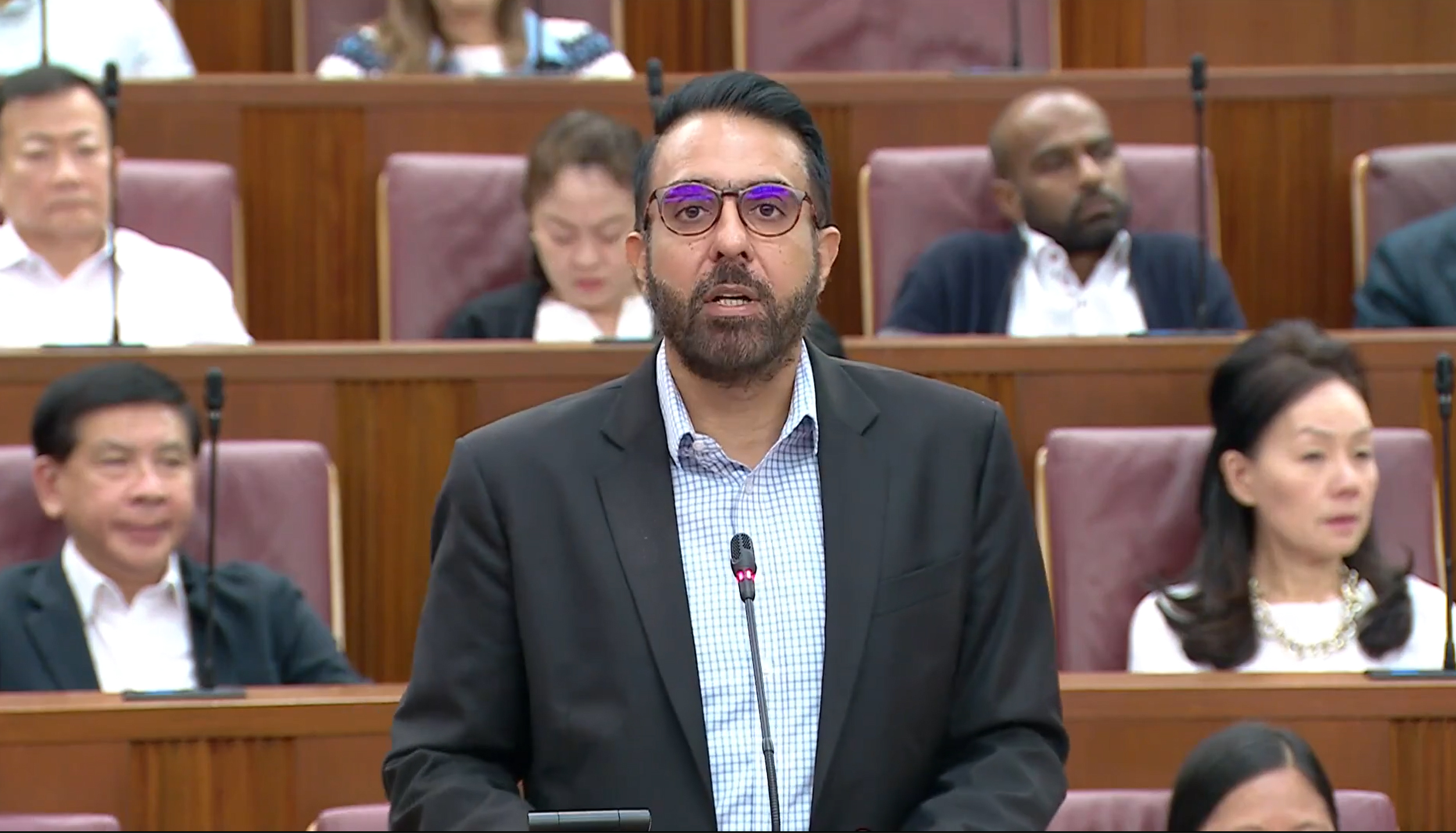
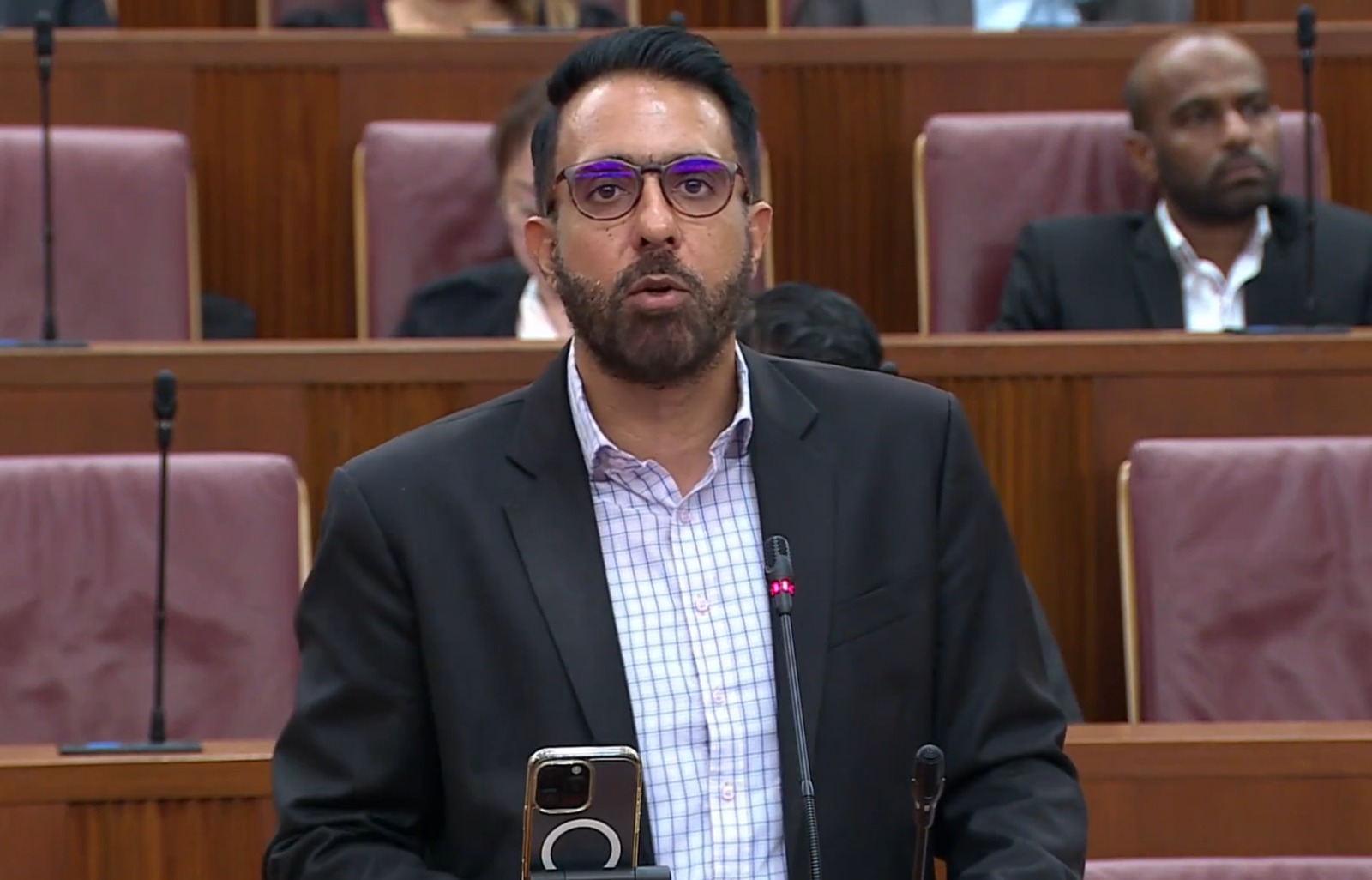
Mr Pritam Singh (Aljunied): Thank you, Mr Speaker. I thank the Leader for extending the time for Members to ask supplementary questions. My question is directed to the Minister for National Development. First and foremost, I thank the Minister for that very nuanced exposition of the Ethnic Integration Policy (EIP). I think it has been the most nuanced reply that I have heard from a Government Minister on the EIP, considering on the one hand the realities of racial integration and other policies that can assist; and on the other, the fact that there are people who actually pay a price for the EIP.
The Minister for National Development (Mr Desmond Lee): I thank the Leader of the Opposition for his three questions.
Mr Desmond Lee: I thank the Leader of the Opposition for the very clear elucidation of the party’s position that it objects to the EIP and would want it abolished.
The Second Minister for National Development (Ms Indranee Rajah): Thank you, Mr Speaker. I just wanted to ask a clarification of the Leader of the Opposition because I was listening to his response.
Mr Desmond Lee: I thank the Member for that very clear position.
Mr Sitoh Yih Pin (Potong Pasir): Thank you, Mr Speaker. Sir, the Leader of the Opposition, the hon Mr Pritam Singh has mentioned CMIO quite a number of times in his speech.
The Senior Minister and Coordinating Minister for National Security (Mr Teo Chee Hean): Mr Speaker, Sir, I had not intended to speak or ask any questions on this very important subject, but I thought that since I have slightly more white hair than most people here who have been speaking, I thought I would share a perspective.
Pritam Singh’s Written Parliamentary Question: 26 July 2021
ETHNIC BREAKDOWN FOR ALL HDB NEIGHBOURHOODS IN PERCENTAGE TERMS ON ANNUAL BASIS AT 31 DECEMBER EACH YEAR SINCE 1989
43 Mr Pritam Singh asked the Minister for National Development with regard to the HDB Ethnic Integration Policy (EIP) (a) what is the ethnic breakdown for all HDB neighbourhoods in percentage terms on an annual basis from 1989 at 31 December each year to date, including the population size of each neighbourhood as at the same date; (b) how many blocks in each neighbourhood surpassed the EIP limits for at least one race at any given year from 1989; and (c) since 1989, how many times has HDB purchased a flat affected by the EIP at the flat’s posted price, market price or valuation price.
Pritam Singh’s Written Parliamentary Question: 13 September 2021
DATA AND STATISTICS ON NEIGHBOURHOODS WHERE AT LEAST ONE ETHNIC INTEGRATION POLICY LIMIT WAS REACHED
66 Mr Pritam Singh asked the Minister for National Development for each of the respective five-yearly intervals from December 1990 to December 2020 (a) what are the names of the Ethnic Integration Policy (EIP)-affected neighbourhoods where at least one EIP limit was reached; (b) what is the total number of HDB units in each of these aforesaid neighbourhoods; and (c) what is the number of HDB units classified as owned or rented by Chinese, Malay and Indian/Others households respectively for each of these affected neighbourhoods.
Pritam Singh’s Speech at MND’s Committee of Supply Debate: 8 March 2021
Mr Pritam Singh: In September last year, I asked the Minister for National Development a written Parliamentary Question for data for each of the respective five-yearly intervals from December 1990 to December 2020 to detail, amongst other things, the names of the EIP or Ethnic Integration Policy affected neighbourhoods where at least one EIP limit was reached and the total number of HDB units in each of these aforesaid neighbourhoods. The Ministry only provided data for 1990 and 2020, even though it was able to provide information in a five-yearly interval for EIP-related question earlier. Why was it unable to provide the information as requested?